
Packaging guides

Cardboard edge protectors: why and how to protect the corners of your pallets

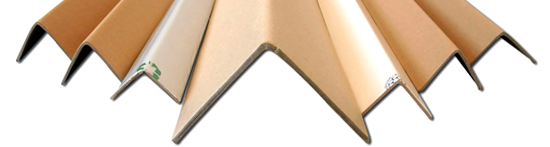
The cardboard edge protectors (or angle boards) are often the overlooked detail of a well-prepared pallet. Yet they protect the corners, spread the strapping tension and stiffen the load. For a few dirhams per pallet, they prevent a large share of transport damage.

What is a cardboard edge protector for?

  • Protecting corners of cartons and products against handling impacts (forklift tines, friction, stacking).
  • Spreading strap tension : without an edge protector, strapping cuts into cartons and crushes the edges.
  • Stiffening the pallet : placed vertically on all four corners, edge protectors improve load integrity and stacking strength.
  • Stabilising the load alongside stretch film and strapping.

How to choose edge protectors

Length

The edge protector should cover the full height of the load, or nearly. A length of 2,300 mm suits most tall pallets; for lower loads, a matching length avoids unnecessary overhang.

Thickness

  • 3.5 mm : standard protection for everyday loads and moderate strapping.
  • 4 mm : heavy loads, high-tension strapping, stacking or long-distance transport.

Leg width

The wider the legs, the better the strap pressure is distributed. Custom sizes can be manufactured on request.

Fitting edge protectors correctly

  1. Place an edge protector on each of the four vertical corners of the load.
  2. Hold them in place with a first wrap of stretch film if needed.
  3. Apply PP strapping or PET strapping strapping over the edge protectors, at even heights.
  4. For unstable loads, add anti-slip sheets between the layers.

ACPACK edge protectors

ACPACK offers two references of compressed cardboard edge protectors, 2,300 mm long:

Reference Use Packaging
2,300 × 3.5 mm Standard protection Pallet of 2,912 edge protectors
2,300 × 4 mm Heavy or high-tension strapped loads Pallet of 2,800 edge protectors

Edge protectors are sold by full pallets, at ex-VAT, ex-works Tangier prices shown on the product page. Collection from our warehouse in the Gzenaya Industrial Zone is free; delivery is free from 20 pallets. Need another size? Request a free quote.
Packaging guides

How to prevent loads from shifting on pallets

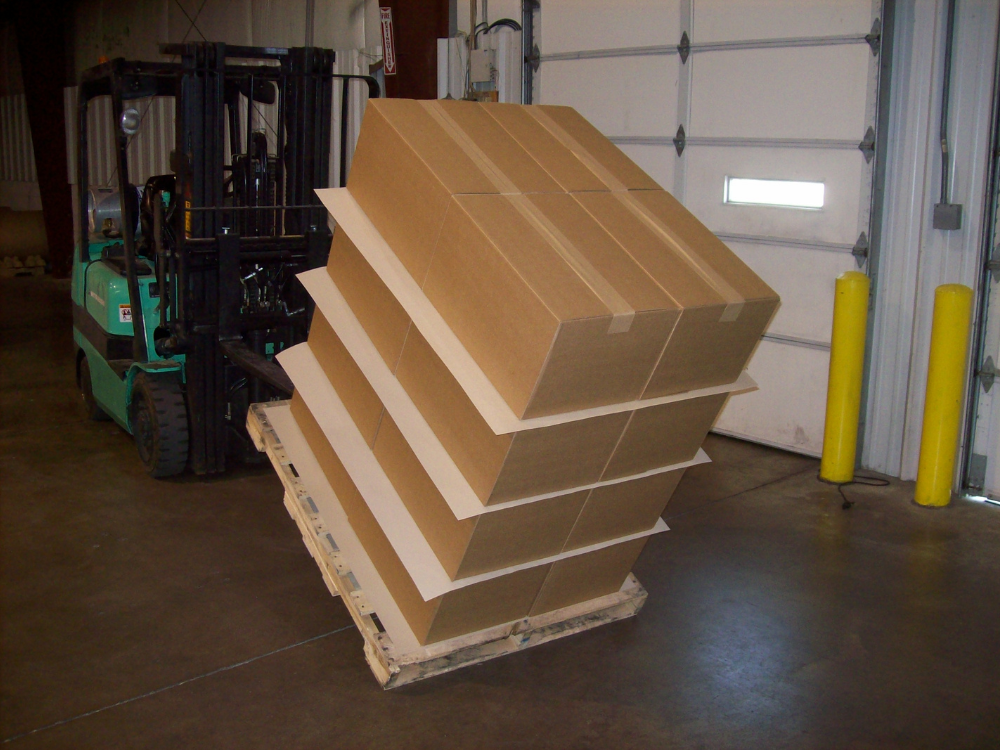
Sliding cartons, a shifted layer, a pallet that arrives leaning or collapsed: load shifting is one of the most common causes of damage and disputes in transport. The good news is that it can be prevented with simple means, provided you tackle the problem inside the pallet as well as outside.

Why do pallet loads shift?

  • Braking, cornering and impacts : in a truck, every braking manoeuvre pushes the upper layers forward.
  • Smooth surfaces : coated cartons, plastic bags, film-wrapped bundles or waxed packaging offer very little grip on each other.
  • Handling : a forklift that accelerates or a pallet set down too hard is enough to shift a layer.
  • Export containers : long transit times, rolling and changes in humidity make the problem worse.

The solutions, from the outside in

1. Stretch film

The stretch film holds the pallet from the outside. It is essential, but not always enough: it contains the load as a whole without stopping the layers from sliding over one another inside.

2. Strapping and edge protectors

The PP strapping or PET strapping, applied with cardboard edge protectors, lock the load to the pallet. This is the standard solution for heavy loads or long journeys.

3. Anti-slip sheets

The anti-slip sheets are sheets of treated paper placed between each layer of the pallet. Their surface increases friction between layers, so cartons, bags or bundles can no longer slide over each other. It is the only solution that works inside the load, where film cannot reach.

Their advantages:

  • less stretch film needed, or none at all for some loads;
  • more stable pallets during handling and transport;
  • a paper sheet, recyclable with your cartons;
  • a size matched to your pallet dimensions.

Which anti-slip sheet grammage should you choose?

At ACPACK, STOPGLISS Grip’n-Slip-Sheet™ anti-slip sheets come in several grammages:

Grammage Recommended use
80 and 90 g/m² Cartons and light to medium loads
220 g/m² Heavier loads, bags, bundles
300 g/m² Heavy and unstable loads, demanding transport conditions

The right grammage depends on the weight per layer, the packaging surface and the mode of transport. If in doubt, a trial on a few pallets will validate the reference before you roll it out.

Good practices to complete the set-up

  • Stack layers in an interlocking pattern (alternating carton orientation) whenever possible.
  • Do not let the load overhang the pallet deck.
  • Place the heaviest products at the bottom.
  • Adjust the film tension and the number of wraps at the top and bottom of the pallet.

Ordering anti-slip sheets in Morocco

ACPACK supplies STOPGLISS anti-slip sheets from Tangier, in lots of 1,000 sheets (1 pallet = 4,000 sheets), with ex-VAT prices shown online. Delivery is free from 1 pallet. Would you like to run a trial on your pallets or find out which grammage suits your product? Request a free quote : our team will advise you.

Packaging guides

PET or PP strapping: how to choose the right one for your pallets

Two materials dominate pallet strapping today: PP strapping (polypropylene) and PET strapping (polyester). Both can be applied by hand or by machine, but they do not meet the same need. Choosing the wrong one means either paying for strength you do not need, or risking a load that loosens in transit. Here is how to decide in four questions.

1. What is the weight and nature of the load?

This is the first criterion.

  • Light to medium loads (cartons, bundles, grouped parcels, paper or food products): PP strapping is sufficient in the vast majority of cases. It is flexible, easy to apply and more economical.
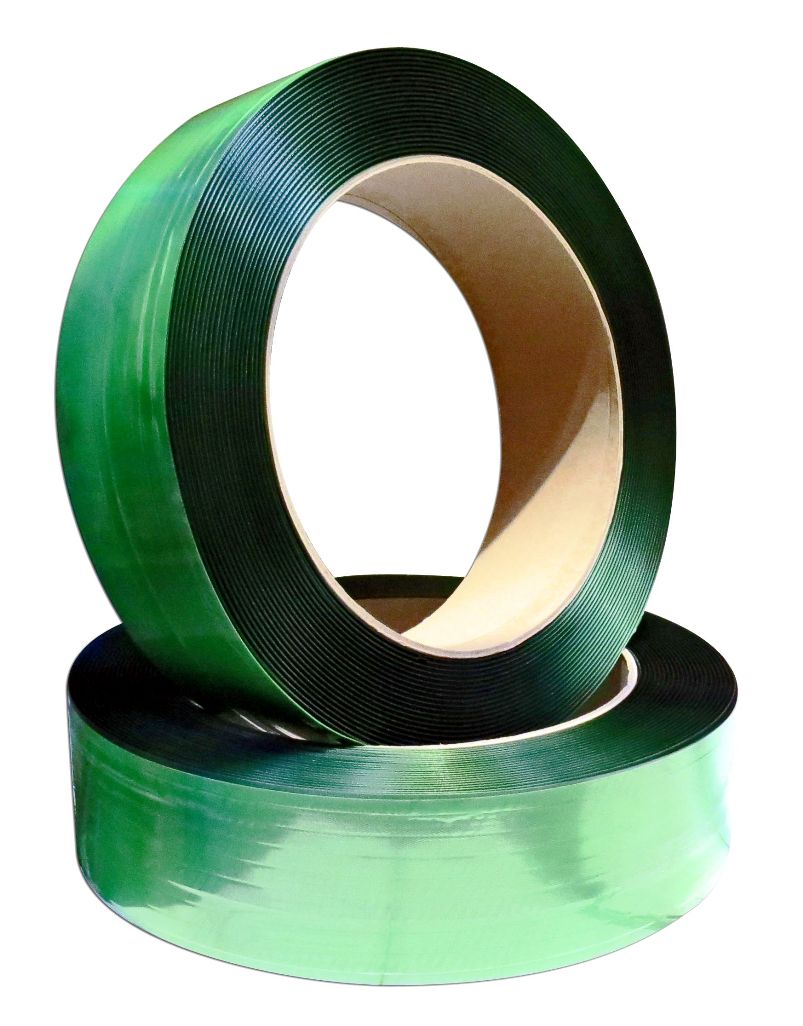
  • Heavy or rigid loads (building materials, timber, metal, bricks, coils, recycling bales): PET strapping is the right choice. Its break strength is far higher, and it is a credible alternative to steel strapping.

2. Must the tension hold over time?

PP is more elastic: it absorbs shocks but tends to relax over time, especially if the load settles or the temperature varies. PET, on the other hand, retains its tension much longer. For long-term storage, long-distance transport or container loading for export, PET is the safest choice.

3. Which strapping tool do you use?

Always check that the strapping is compatible with your equipment:

  • Table-top or semi-automatic strapping machine : usually designed for PP, in widths from 12 to 16 mm.
  • Battery-powered hand tool (tensioner-sealer): handles both PP and PET, provided tension and weld settings are adjusted to the material.
  • Automatic in-line strapping machine : 15 or 19 mm PET is common for heavy loads.

Width and thickness must match what your machine accepts. If in doubt, give us the make and model: we will check compatibility before you order.

4. What budget per pallet?

PP is the most economical option per metre and suits most carton flows. PET costs more, but it often lets you apply fewer straps per pallet thanks to its strength, and it avoids the losses caused by a load that works loose. The right calculation is therefore not just the price per coil, but the cost per pallet shipped without incident.

Summary table

Criterion PP strapping PET strapping
Typical loads Light to medium: cartons, parcels, bundles Heavy: timber, metal, materials, export
Tension retention Good in the short term Excellent, even over long periods
Tools Table-top strappers, hand tools Battery tools, automatic strappers
ACPACK references 12 × 0.55 · 12 × 0.63 · 15 × 0.73 · 16 × 0.80 mm, black or white 12 × 0.75 · 15 × 0.80 · 19 × 1.00 mm, green

Our application tips

  • Combine strapping with cardboard edge protectors : they spread the tension and stop the strap from marking or crushing carton corners.
  • Store coils away from sunlight and moisture to preserve their properties.
  • Do not over-tension PP: beyond a certain point it stretches without holding any better.

Ordering in Morocco

ACPACK supplies PP strapping and PET strapping by the coil, with ex-VAT prices shown online. Orders are prepared in Tangier (Gzenaya Industrial Zone) and delivered throughout Morocco; delivery is free from 20 pallets. Need advice on your load or your strapping machine? Request a free quote : we will get back to you quickly.